Nine projects, each with a repository and a write-up.
Two long-running labs and a public website for a fictional bank, a cloud build in progress, three tools, and two graduate assessments. Every case study covers the objective, the architecture, what got built, the decisions behind it, and what is next.
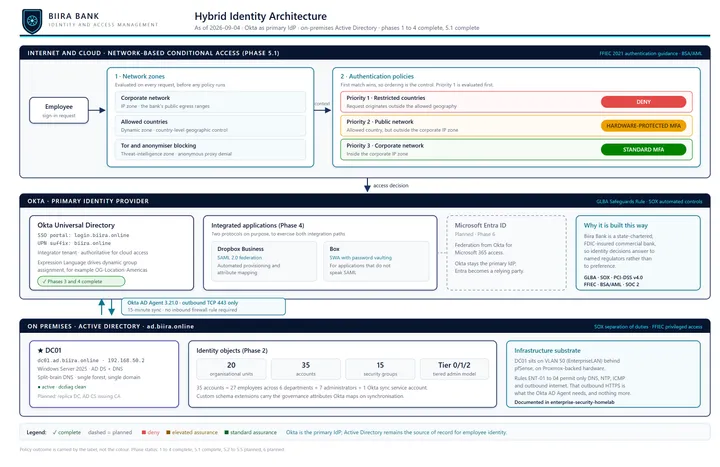
Enterprise IAM Lab: Hybrid Identity for a Regulated Bank
On-prem Active Directory with a tiered admin model, federated to Okta Workforce Identity and Microsoft Entra ID over SAML, OIDC and SWA, with network-aware conditional access and graduated MFA. Built to the regulatory drivers a real bank would have to satisfy, and now being rebuilt on a new forest from a written decision record.
Read the case study →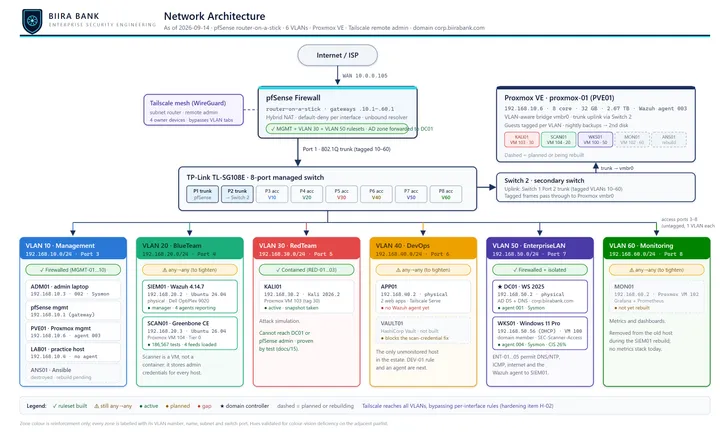
Enterprise Security Homelab
A six-VLAN, default-deny network for a fictional regional bank: pfSense, managed switching, a Proxmox hypervisor on a trunk port, a Windows Server 2025 domain controller, a Wazuh SIEM with four agents and its own detection rules, a Greenbone scanner whose identity is administrator on member machines and nothing on the domain, a first finding found, fixed and proved closed, and every firewall rule justified and mapped to a NIST control.
Read the case study →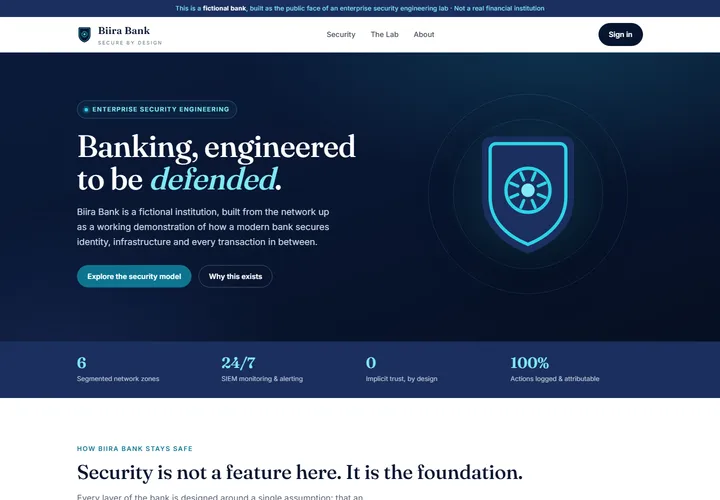
biirabank.com: The Public Tier
Biira Bank's public website on Cloudflare Workers: zero JavaScript, a Content Security Policy with no script source at all, TLS 1.2 as the floor, and an independent security-header grade that moved from F to A+. Testing found the site still answering on a default hostname the zone's controls did not cover, and closed it.
Read the case study →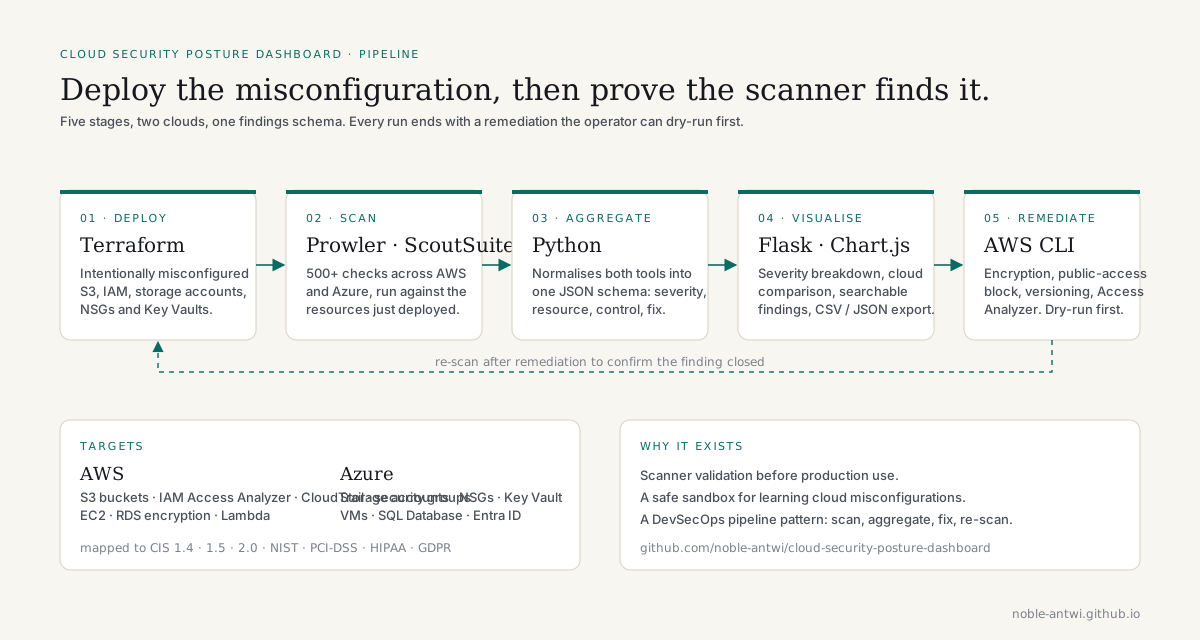
Cloud Security Posture Dashboard
Terraform deploys deliberately misconfigured AWS and Azure resources, Prowler and ScoutSuite scan them, and a Flask dashboard normalises 500+ checks into one findings schema with remediation commands and CIS, NIST and PCI mapping.
Read the case study →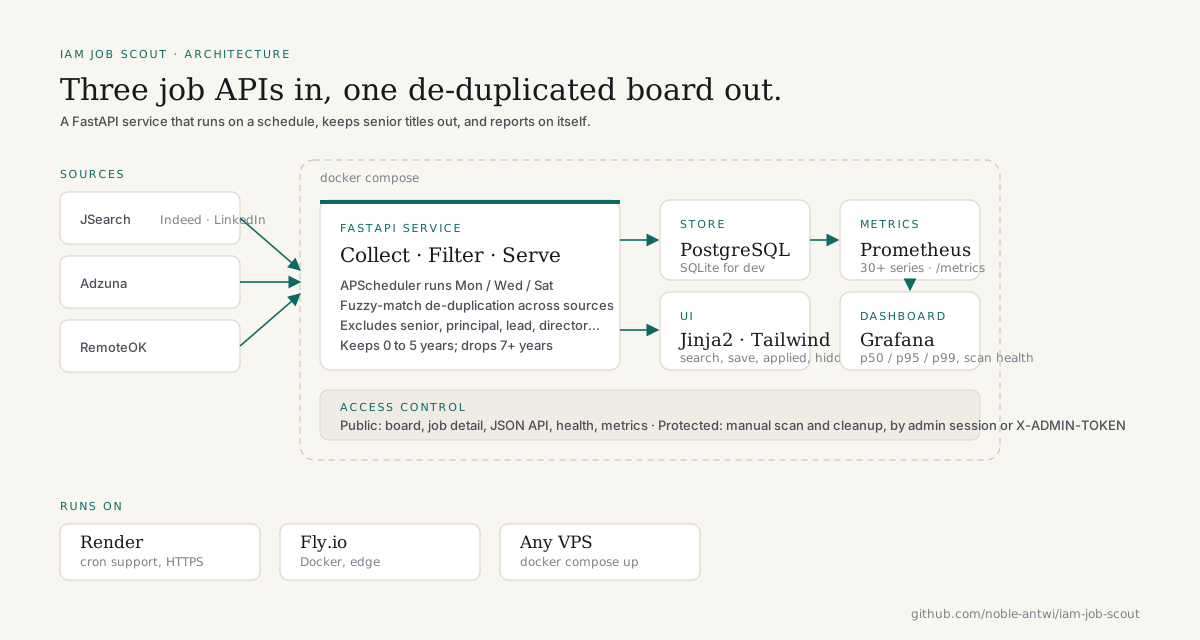
IAM Job Scout
A FastAPI job board that pulls IAM roles from three job APIs, de-duplicates them with fuzzy matching, filters out senior titles, and ships with Prometheus metrics, a Grafana dashboard and Docker Compose deployment.
Read the case study →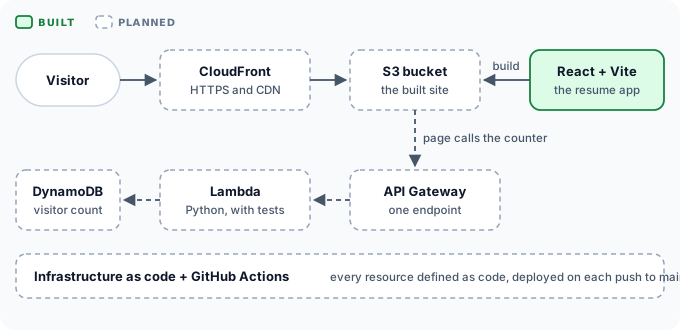
Cloud Resume Challenge
A resume rebuilt as a cloud-hosted website through the AWS Cloud Resume Challenge: a React frontend with routed project pages is done; S3 and CloudFront hosting, a serverless visitor counter, infrastructure as code and CI/CD are the stages ahead.
Read the case study →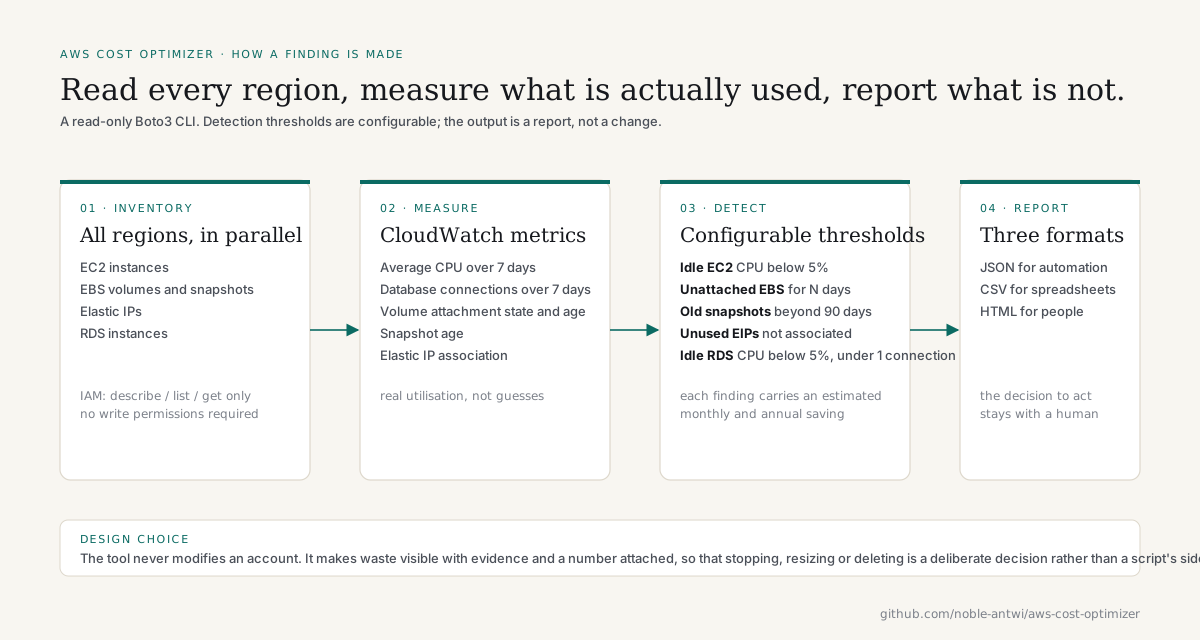
AWS Cost Optimizer
A read-only Python CLI that scans every region of an AWS account for idle EC2 instances, unattached EBS volumes, outdated snapshots, unused Elastic IPs and idle RDS databases, using real CloudWatch utilisation rather than guesses, and reports the waste with a monthly and annual figure attached.
Read the case study →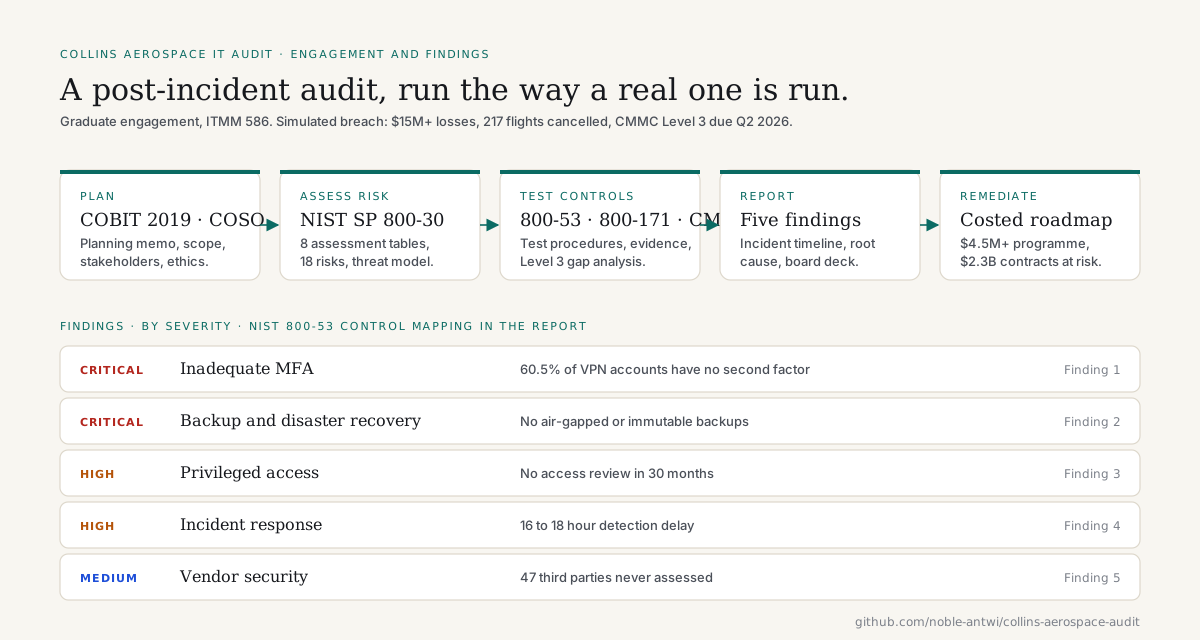
Collins Aerospace IT Audit: Post-Incident Assessment
A graduate IT-audit engagement on a simulated aerospace breach: COBIT-framed planning, NIST 800-30 risk assessment, CMMC Level 3 gap analysis, five headline findings and a costed remediation roadmap.
Read the case study →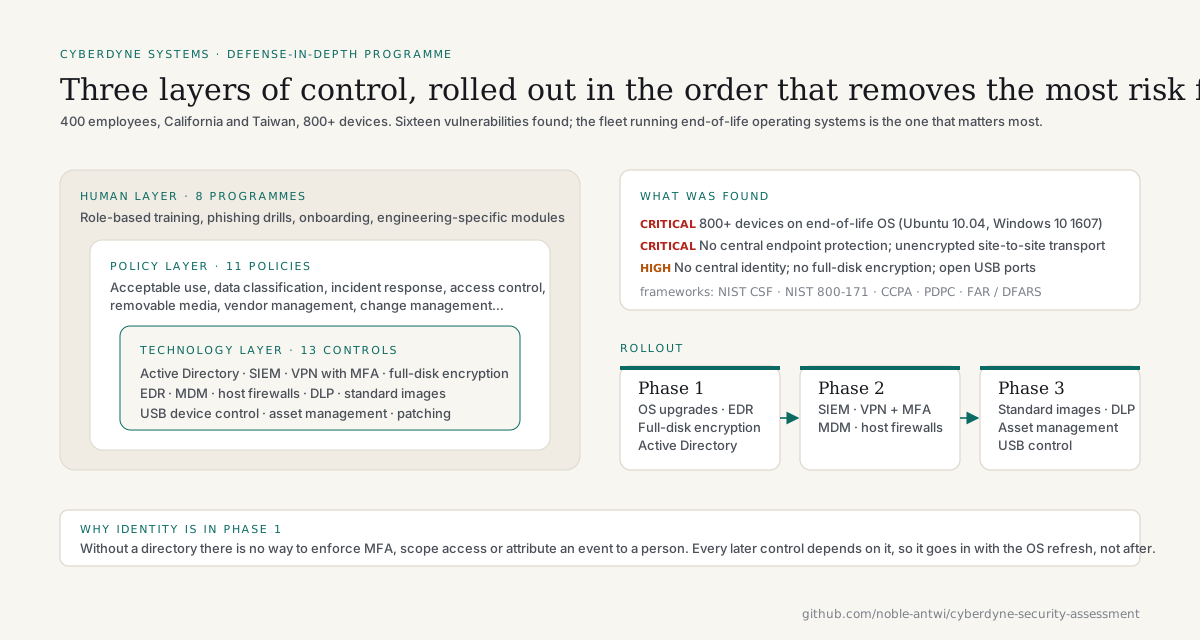
Cyberdyne Systems: Enterprise Security Assessment
A defense-in-depth program for a fictional 400-person manufacturer across two countries: 16 vulnerabilities, 13 technical controls, 11 policies, and a three-phase rollout that starts with the end-of-life fleet and identity.
Read the case study →No projects in this category yet.
The repositories are public and the documentation is written so someone else could rebuild the lab.